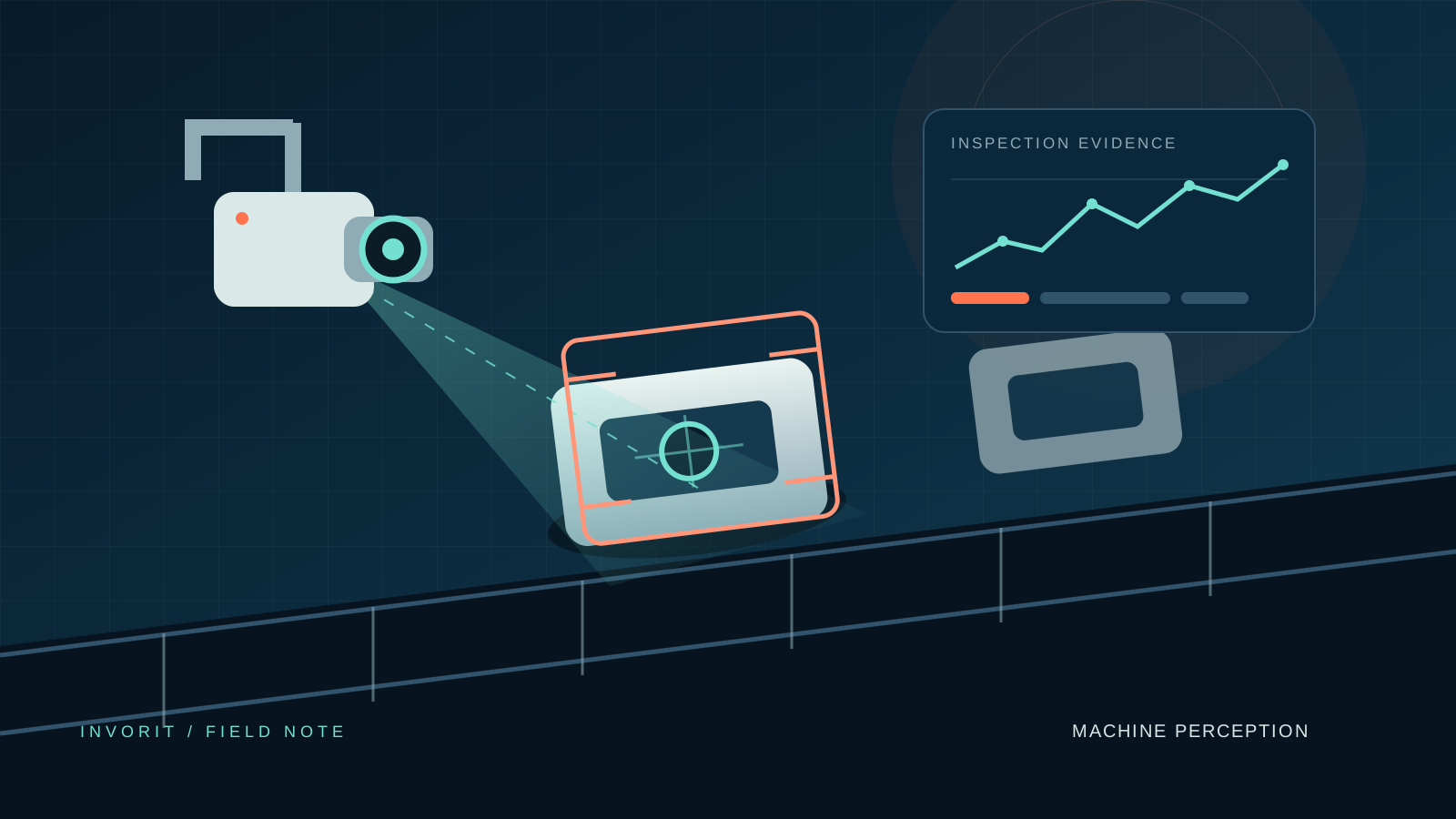
Computer vision demonstrations can look convincing long before they are ready for production. A model detects a component in a sample image, a dashboard shows a green result, and the project appears close to completion. On the factory floor, however, the same system must work across shifts, batches, surface finishes, vibration, dust, changes in line speed and operator interventions.
The image is part of the system
A Vision AI system cannot recover information that the camera never captured. Before selecting a neural network, the team should define the smallest defect or feature that matters, the required field of view, available inspection time and variation in the part’s presentation.
Those requirements drive camera resolution, lens choice, working distance, exposure and lighting geometry. Glossy surfaces may need diffuse or polarized light. Fine scratches may require dark field illumination. Dimensional measurement needs calibration and stable geometry. Fast motion may require short exposures and synchronized triggering.
Engineer image formation so the important difference is obvious and repeatable. Then use AI where variation genuinely requires it.
Use the simplest reliable decision method
Not every inspection requires deep learning. Presence checks, geometry, edge measurement and code reading are often better served by deterministic vision. Classification and object detection help when appearance varies but labelled examples exist. Anomaly detection can be useful when defects are rare or not fully known.
A production system may combine all three. Deterministic checks establish geometry, a model handles visual variation, and explicit business rules convert detections into an accept, review or reject decision. The goal is not to maximize the amount of AI. It is to create the most reliable and maintainable inspection.
Connect perception to production context
A camera may correctly identify six components and still make the wrong operational decision if it does not know which product variant is being built. Systems ready for the factory need context from the PLC, active recipe, bill of materials, work order, station state and traceability record.
Context answers questions the image alone cannot:
- Which component and orientation should be present for this variant?
- Is this image associated with a complete production cycle?
- Should the system stop the station, request review or only record evidence?
- Which serial number, batch and process parameters belong to the result?
Validate the operating envelope, not a curated dataset
A random split between training and testing is not enough when adjacent images may come from the same part, batch or shift. Validation should challenge the system with meaningful production boundaries: unseen batches, material suppliers, tooling conditions, operators, lighting drift and acceptable variation close to the defect threshold.
False accepts and false rejects also have different costs. A missing component that affects safety and a cosmetic review case should not share the same threshold strategy. Evaluation must reflect the consequence of each decision and include a controlled path for uncertain results.
The output is a controlled action
A useful inspection does more than draw a box around a defect. It makes a timely decision, communicates that decision reliably, records the evidence and gives people a clear recovery workflow. If the model is unavailable, the system should fail predictably. If a result is uncertain, the line should know what to do next.
This is why Vision AI for factories is a systems engineering discipline. Models matter, but so do optics, controls, product context, human review, traceability and maintenance over time. Reliability comes from designing the complete chain.